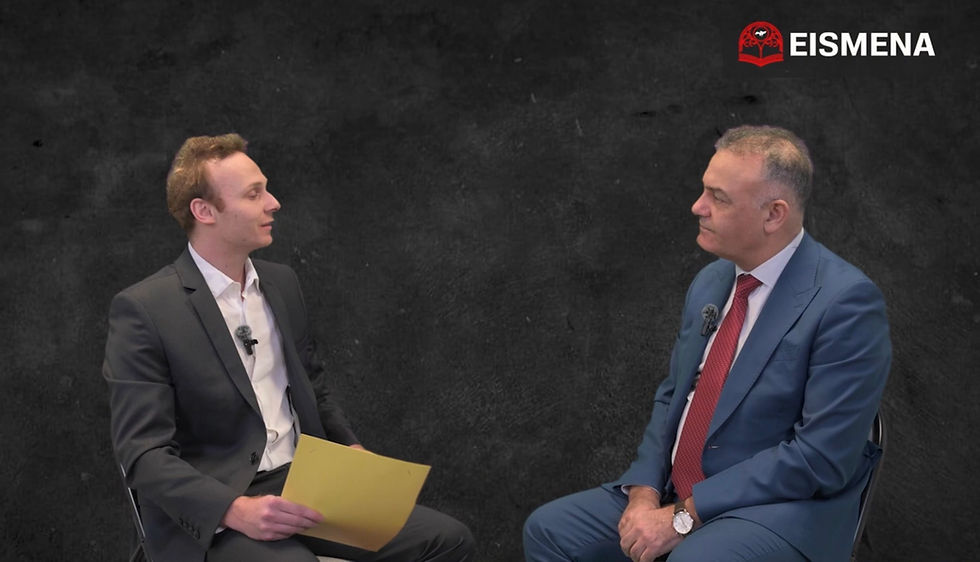
Interview Malak Eldebuch - Candidate for the Syrian Parliamentary Elections in Damascus

Could you introduce yourself and tell us about your background?
My name is Malak Eldebuch. I am a human rights advocate and civil society activist, and a survivor of political imprisonment.
For over a decade, I have dedicated my efforts to defending human rights, with a special focus on detainees and survivors of abuse.
Through my candidacy, I seek to transform this experience into policies and legislation that promote transitional justice and help build a more just and cohesive society.
What motivated you to run for the elections in Damascus?
My candidacy stems from the conviction that Parliament must represent the voices of victims and survivors.
My electoral program focuses on core issues: transitional justice, uncovering the fate of detainees and the missing, rehabilitation for survivors, as well as combating poverty, preventing school dropouts, and empowering women and youth.
How does your experience as a human rights lawyer influence your candidacy?
My legal background has given me the tools to understand legislative challenges and how the law can either protect rights or restrict them.
This is why my electoral program emphasizes legislative reform that strengthens transitional justice, ensures victims’ participation, and lays the legal foundation for a fair and civil state.
In your view, what are the main challenges to ensuring security and stability in Damascus and Syria?
One of the main challenges is the continued external interference, which weakens national decision-making and complicates the political and security landscape.
Another challenge is the absence of a serious transitional justice process, which leaves victims’ wounds unhealed and prevents society from moving forward.
Real stability can only be achieved by restoring independent national decision-making and launching a comprehensive transitional justice process that secures the rights of survivors and opens the way for genuine national reconciliation.
What is your vision for the future of the country?
I envision a free, civil, and democratic Syria founded on transitional justice and equal citizenship.
A Syria that prioritizes the rights of victims and survivors, reintegrates them into society through comprehensive rehabilitation programs, protects children from poverty and exploitation, and empowers women and youth as key decision-makers.
If you could send a message to investors or international observers trying to understand Syria, what would you say?
My message is that investment in Syria is not only about infrastructure, but also about justice, education, and community empowerment.
Syria has immense human potential that can rebuild the country once fair stability is achieved.
Therefore, any international effort or investment should focus on supporting transitional justice and sustainable development.